Côte d’Ivoire
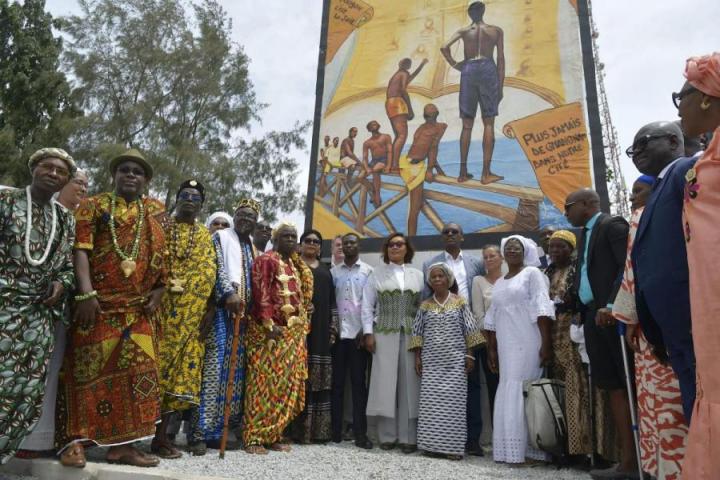
“These monuments symbolise the long journey of Duékoué’s communities since 2011. They lift the weight of the horrors we endured and witnessed. Today, what we lived through is no longer hidden — it is known and acknowledged throughout Côte d’Ivoire. We are no longer alone in carrying the memory of the 2011 events. I feel lighter now.” – A survivor of the 2011 events in Duékoué and beneficiary of the programme
At a glance
|
Status |
Completed on 31 May 2025 |
|
Programme period |
2021 – May 2025 |
|
Where |
Lagunes (Abidjan), Haut-Sassandra, Guémon and Cavally |
|
Who it serves |
Victims and communities affected by 13 emblematic incidents between 2002 and 2011 |
|
People reached |
835 victims through individual rehabilitation; more than 10,000 through community activities; more than 131,000 through memorialisation |
|
|
Background
Côte d’Ivoire accepted the jurisdiction of the ICC in 2003 through an Article 12(3) declaration and has been a State Party to the Rome Statute since 2013.
The ICC has jurisdiction over the situation in Côte d’Ivoire in respect of alleged crimes committed between 19 September 2002 and 28 November 2010, as well as any that may be committed in the future in the context of this situation. Since 2011, the Office of the Prosecutor has investigated alleged crimes against humanity committed during the 2010–2011 post-electoral violence, documenting large-scale acts that displaced approximately one million people. These included widespread and systematic violence against civilians, the excessive use of force in densely populated areas to disperse protesters, mass arbitrary arrests, enforced disappearances, rape, and several mass graves.
To date, the investigations have given rise to three cases, all of which had ended in acquittal or been vacated by 2021. The Office of the Prosecutor’s investigation remains ongoing.
The programme
Alongside these investigations and judicial proceedings – and, in part, ahead of them – the TFV launched a programme for individuals and communities affected by the most emblematic incidents of 2002 to 2011. The programme was designed and implemented with regard to the national reparations initiative led by Côte d’Ivoire’s Ministries of National Cohesion, Solidarity and the Fight Against Poverty, and delivered in partnership with the Government of Côte d’Ivoire.
The programme followed an incident-based approach, targeting the harm arising from thirteen incidents that are well known to the Ivorian population and carry a strong symbolic dimension. The incidents were selected in consultation with civil society organisations and victims’ associations, acting together as an advisory committee to the TFV, against the following criteria:
- the typology and severity of the harm;
- a coherent and non-discriminatory distribution of victims across communities;
- documentation of the incidents by the National Commission of Enquiry, the Dialogue, Truth and Reconciliation Commission, or other recognised national or international bodies – allowing the harm to be qualified as falling within the scope of Rome Statute crimes and confirming victims’ eligibility; and
- the location of the incidents in relation to the TFV’s areas of operation in Côte d’Ivoire.
Following a thorough review, the TFV and its advisory committee chose to open the programme with symbolic, community-based actions that acknowledged the harm suffered by victims.
Who the programme is for
People the programme works with directly:
- Victims of the thirteen emblematic incidents who suffered enduring physical, psychological and material harm. A list of eligible victims was finalised after initial meetings to provide relief and assess the harm; further victims joined in 2024.
People who benefit more widely:
- The affected communities, through community-based therapy, memorials and renovated public amenities.
What the programme delivers
The programme rested on three pillars:
- Individual rehabilitation
- Community therapy
- Symbolic and memorialisation measures
Individual rehabilitation. Holistic rehabilitation pathways were designed with each victim, taking account of the physical and other enduring harms suffered. In total, 835 victims received medical, psychological or socio-economic rehabilitation.
Community therapy. Integrated community-based therapy was introduced to address the moral harm experienced by a large number of victims. It was delivered in every locality targeted by the programme, with more than 1,400 individuals attending sessions regularly.
Memorialisation. The TFV worked with a dozen artists to create memorials in line with the wishes of each affected community. In 2024, it completed and delivered six memorials – five of them built in collaboration with the national authorities – to address the collective moral harm borne by these communities. Some communities chose instead to mark their suffering through the renovation of public amenities, including wells, water towers, classrooms and school canteens. In all, eleven symbolic constructions were delivered, benefiting more than 131,000 victims.
A series of films and photographs documents the paths that communities and individuals took to come to terms with the thirteen incidents. This material is shown on the anniversaries of the incidents and continues to be used in commemoration.
Funding
Since 2004, 53 States Parties have contributed at least once to the TFV, for a total of EUR 56 million. Because of the nature of its interventions, contributions to the TFV are ODA-eligible and may be earmarked to a specific country, type of victim or type of activity.
The programme is designed and managed by the Secretariat of the TFV under the supervision of the Board of Directors. The Secretariat is funded from the regular contributions of States Parties, so there are no overheads on the programme and resources go entirely to victims.
Last Update: September 2026.