Georgia
“You gave me back my life.” – A participant, after several months of psychological support through the programme
At a glance
|
Status |
Ongoing – extended for several months beyond the initial three-year period |
|
Programme period |
April 2023 – 2026 |
|
Where |
Villages along the Administrative Boundary Line in Shida Kartli; settlements for internally displaced persons in Mtskheta-Mtianeti and Kvemo Kartli |
|
Who it serves |
Victims directly harmed in the 2008 war and their families |
|
People reached |
3,062 direct beneficiaries since April 2023, as at 30 June 2026 |
|
Investment |
EUR 600,000 for 2023–2026 |
Background
The programme addresses harm resulting from war crimes and crimes against humanity committed in and around the South Ossetia region between 1 July and 10 October 2008.
The TFV filed the Regulation 50 Notification before Pre-Trial Chamber II regarding the Georgia programme. On 16 June 2022, the Pre-Trial Chamber informed the Board of Directors that the proposed activities did not appear, per se, to pre-determine any issue to be determined by the Court.
The programme
The TFV launched the rehabilitation programme for the situation in Georgia in April 2023, following extensive consultations with government authorities, civil society, victims and affected communities, alongside a rigorous, open and competitive call for proposals.
The overall aims of the programme correspond to TFV strategic goal No. 1:
- Victims and their families recover from the harm caused by war crimes, live in dignity, and contribute to reconciliation and peacebuilding within their communities.
- The programme supports the social inclusion and self-determination of victims and their families who suffered physical, psychological and material harm as a result of the 2008 conflict.
Who the programme is for
Victims living in villages along the Administrative Boundary Line (ABL) and in settlements for internally displaced persons across Shida Kartli, Kvemo Kartli and Mtskheta-Mtianeti, who were directly harmed in the 2008 war.
People the programme works with directly:
- People who were abducted and held in captivity by the Russian occupation forces;
- Children, young people and families affected by ongoing detentions and threats along the ABL;
- Older people affected by the 2008 war.
People who benefit more widely:
- Households, communities and youth leaders, through awareness-raising, training and capacity-building activities.
What the programme delivers
The programme provides the most vulnerable victims with:
- Medical treatment
- Counselling and psychosocial support
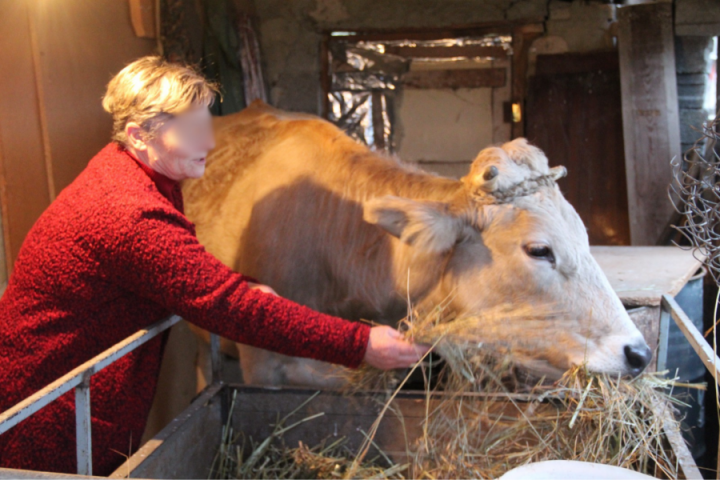
- Livelihood and socio-economic initiatives, such as fruit, vegetable and bee farming
Results. From July 2025 to June 2026, 676 individuals received direct support: 157 received counselling, 195 received psychosocial counselling and 168 received help to establish income-generating activities. A further 16 internally displaced and war-affected individuals received small grants across three regions. Since April 2023, 3,062 individuals have benefited directly.
Youth engagement. Young people from conflict-affected villages take part in workshops and training. Participants produced short video stories about life close to the ABL, which will form the basis of a documentary film to be entered in international competitions.
Funding
Since 2004, 53 States Parties have contributed at least once to the TFV, for a total of EUR 56 million. Because of the nature of its interventions, contributions to the TFV are ODA-eligible and may be earmarked to a specific country, type of victim or type of activity.
The programme is designed and managed by the Secretariat of the TFV under the supervision of the Board of Directors. The Secretariat is funded from the regular contributions of States Parties, so there are no overheads on the programme and resources go entirely to victims.
Last update: July 2026